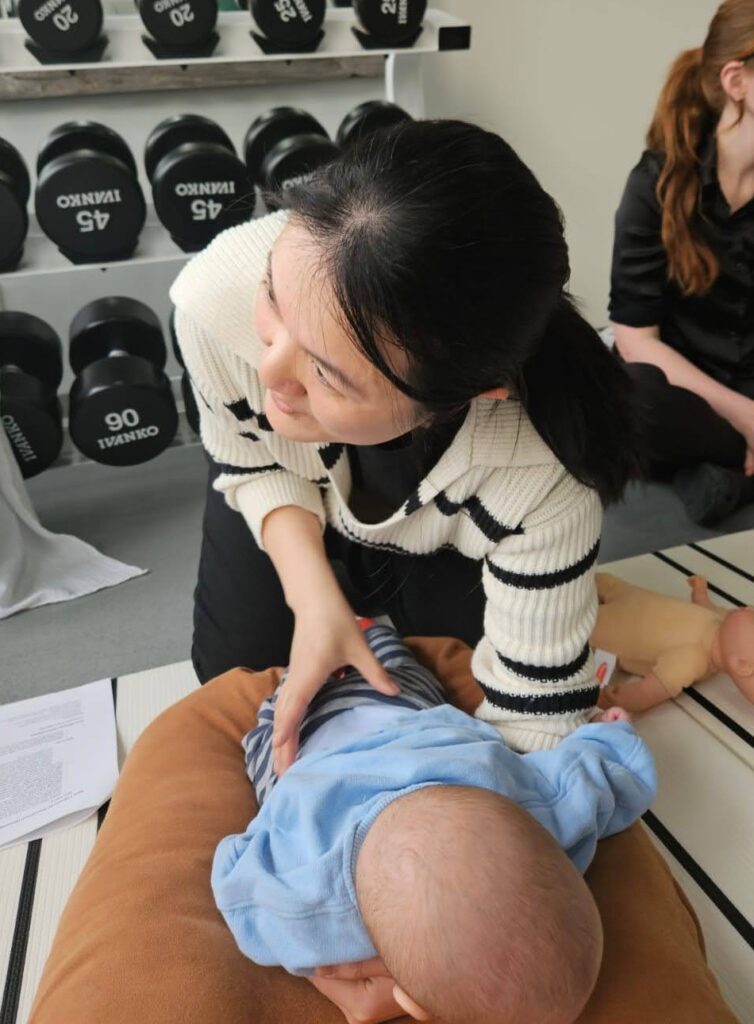
Highlights from a community workshop on chiropractic assessment and treatment for babies.
What parents should know about assessment, gentle care, common concerns and when referral may be appropriate.
Why Babies May Develop Muscle or Joint Concerns
Even though babies are tiny, they’re not immune to musculoskeletal issues. Their bodies are rapidly developing, and both prenatal and birth experiences can influence how they move.
Common contributing factors include:
- Birth mechanics: Difficult or assisted deliveries (forceps, vacuum) can strain muscles and soft tissues.
- In‑utero positioning: Breech babies or twins sharing limited space may arrive with uneven muscle tone or asymmetry.
- Early developmental conditions: Issues like developmental dysplasia of the hip (DDH) can influence movement patterns.
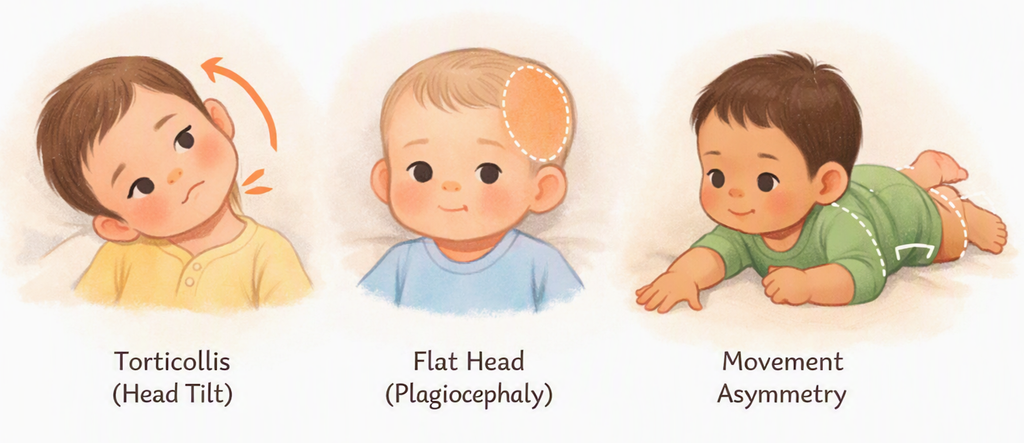
These factors can contribute to concerns such as torticollis, where tightness or imbalance in the neck leads to a head tilt or a strong preference for looking in one direction.
What Pediatric Chiropractic Care Looks Like
Chiropractic care for babies is very different from what adults receive. Everything is scaled to their size, development, and comfort.
Assessment
During an infant assessment, I look at:
- Neck and head movement
- Muscle tone and symmetry
- Positioning and comfort
- Age‑appropriate movement patterns
I also listen closely to what you’ve noticed at home — whether it’s a head tilt, difficulty turning, or discomfort in certain positions.
Treatment
When treatment is appropriate, techniques are gentle and tailored to infants:
- Light mobilization
- Soft‑tissue techniques
- Positioning strategies
- Simple home exercises woven into play or tummy time
Parents are part of the process. I explain what I’m assessing, what I’m doing, and what you can watch for at home.
Why Parents Bring Babies for Assessment
Parents often seek an evaluation because they’ve noticed:
- A preference for turning the head one way
- Neck tightness or limited movement
- A head tilt or asymmetry
- Flat spots or concerns about head shape
- Differences in movement from side to side
- Questions about developing movement patterns
These concerns can relate to how the baby was positioned before birth, their birth experience, or early movement habits.
Is Chiropractic Care Safe for Babies?
It’s natural for parents to wonder about safety, especially if their only experience with chiropractic care involves adult adjustments.
Infant chiropractic techniques are modified for a baby’s developing body and should be provided by a practitioner with appropriate pediatric training. Before any treatment, I assess your baby’s health history and movement to determine whether chiropractic care is appropriate.
If something falls outside my scope or would be better evaluated by another healthcare provider, I’ll recommend that instead. Collaborative care may include communication with your baby’s physician, physiotherapist, occupational therapist, lactation consultant, or other professionals.
What About Developmental Milestones?
Babies develop at their own pace. Chiropractic care isn’t meant to make a baby reach milestones faster, but it can help identify musculoskeletal factors that may make certain movements more difficult. For example, significant neck tightness or a strong preference for one side may affect how comfortably a baby explores rolling, tummy time, or early sitting.
If I’m concerned that a developmental issue needs assessment beyond chiropractic care, I’ll help guide you toward the appropriate professional. Sometimes an assessment provides reassurance. Other times it identifies something that may benefit from gentle treatment, home strategies, monitoring, or referral.
Final Thoughts
Many parents bring their babies in simply for a wellness check, not because something is wrong, but because it helps them feel confident about their child’s movement and development. A gentle assessment can offer reassurance, answer questions, and highlight small patterns worth keeping an eye on. Sometimes there’s nothing to treat; sometimes a few simple home strategies make all the difference. It’s a calm, supportive way to help parents feel informed and comfortable as their baby grows.