
Highlights from a community workshop on running, training load, movement and injury prevention.
Running is one of the most accessible forms of exercise — but it’s also one of the easiest ways to develop overuse injuries if your body mechanics or training habits aren’t quite right. Whether you’re training for your first 5K or your tenth marathon, understanding how to prevent injuries can keep you running strong for years to come.
Common Running Injuries
Runners often face recurring issues that stem from repetitive stress or imbalances:
- Runner’s Knee (Patellofemoral Pain) – irritation under the kneecap
- IT Band Syndrome – tightness along the outer thigh
- Shin Splints – inflammation along the shin bone
- Plantar Fasciitis – heel and arch pain from overstressed fascia
- Achilles Tendinopathy – stiffness or pain at the back of the ankle
- Ankle Sprains – ligament strain from uneven terrain
- Muscle Strains – often from sudden acceleration or fatigue
Why These Injuries Happen
Most running injuries share common roots:
- Overuse: Too much mileage, too soon
- Biomechanical Issues: Poor alignment or gait patterns
- Muscle Weaknesses: Especially in hips, glutes, and core
- Structural Factors: Flat feet, leg length differences, or joint mobility limits
- Improper Footwear: Shoes that don’t match your gait or terrain
- Training Errors: Skipping rest days or ignoring recovery
- Technique Problems: Overstriding or poor posture
What Good Running Technique Looks Like
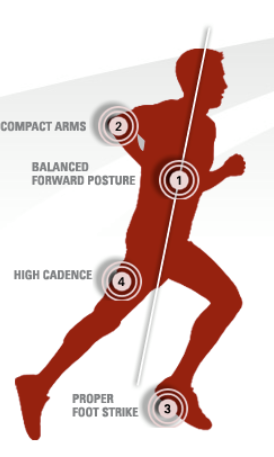
Efficient running form helps prevent strain and improve performance:
- Balanced Forward Posture: Slight lean from the ankles, not the waist
- Efficient Stride Length & Cadence: Shorter, quicker steps reduce impact
- Engaged Core: Stabilizes the spine and pelvis
- Smooth Arm Swing: Keeps rhythm and balance
- Midfoot Strike: Promotes shock absorption and efficiency
Common Technique Mistakes
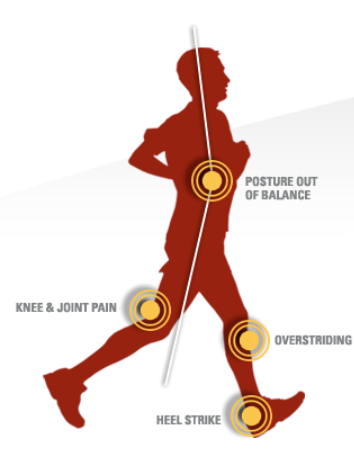
Avoid these habits that can lead to pain or inefficiency:
- Overstriding: Landing too far ahead of your body
- Heel Striking: Excessive braking forces
- Hip Drop: Weak glutes causing pelvic instability
- Rounded Shoulders: Restricts breathing and arm swing
- Over‑Rotation: Wastes energy and stresses joints
Running Myths — Debunked
- Stretching prevents injuries → Static stretching before running can actually reduce power; dynamic warm‑ups are better.
- Heel striking is always bad → Not necessarily; it depends on cadence and posture.
- Barefoot running prevents injuries → It can help some runners but increases risk for others.
- Running is bad for your knees → Proper form and strength training protect joints.
- You can skip the gym → Strength and mobility work are essential for injury prevention.
Evidence‑Based Prevention Strategies
- Gradual Progression: Follow the 10% rule — increase mileage slowly.
- Strength & Cross‑Training: Build resilience through variety.
- Dynamic Warm‑Up: Prepare muscles and joints before each run.
- Proper Footwear & Gait Analysis: Match shoes to your stride.
- Biomechanical Assessment: Identify and correct imbalances early.
- Nutrition & Hydration: Fuel recovery and performance.
- Rest & Recovery: Pain is a signal — don’t push through it.
Final Thoughts
Running should feel empowering, not punishing. With mindful training, balanced mechanics, and proper recovery, you can stay injury‑free and enjoy every stride.