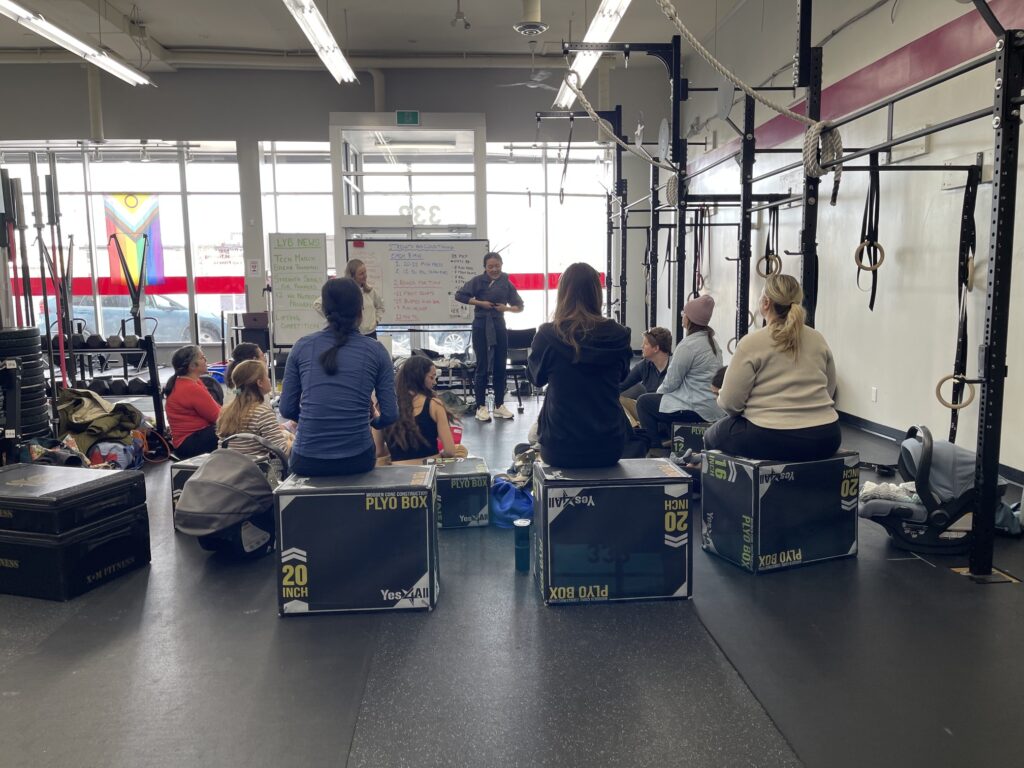
Highlights from a community workshop on practical considerations for babywearing.
Babywearing can be a wonderful way to keep your little one close while keeping your hands free. It can also support comfortable movement and make everyday life with a baby a little easier.
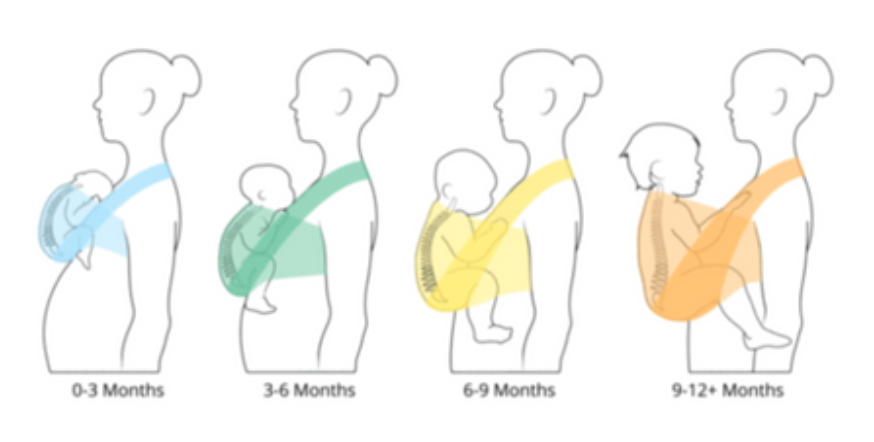
Spinal Development
Babies aren’t born with adult spinal curves—they develop them gradually.
- 0–3 months: Natural “C‑curve,” knees tucked up.
- 3–6 months: Beginning to extend, gaining head control.
- 6–9 months: More upright posture emerging.
- 9–12+ months: Stronger lumbar curve from crawling and sitting.
Hip Development
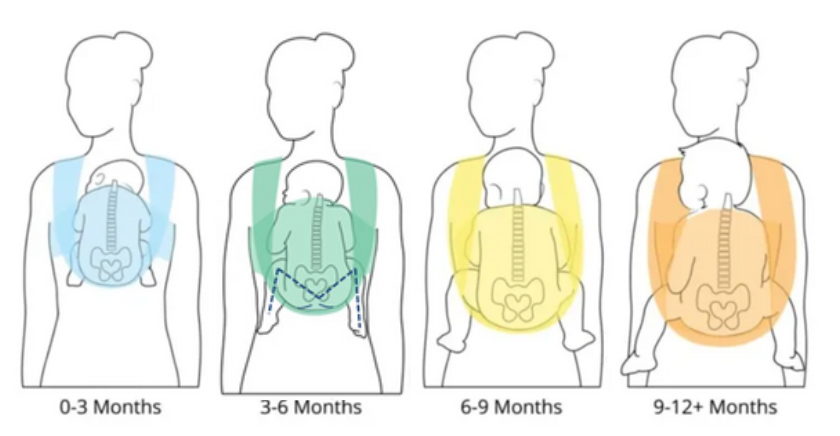
- 0–3 months: Knees bent, pelvis narrow—needs full thigh support.
- 3–4 months: Legs begin to wrap around caregiver’s torso.
- 6+ months: Ideal “M‑position” becomes natural.
Healthy hip pressure helps deepen the socket and reduces risk of Developmental Dysplasia of the Hip (DDH).
The Gold Standard: The “M” Position
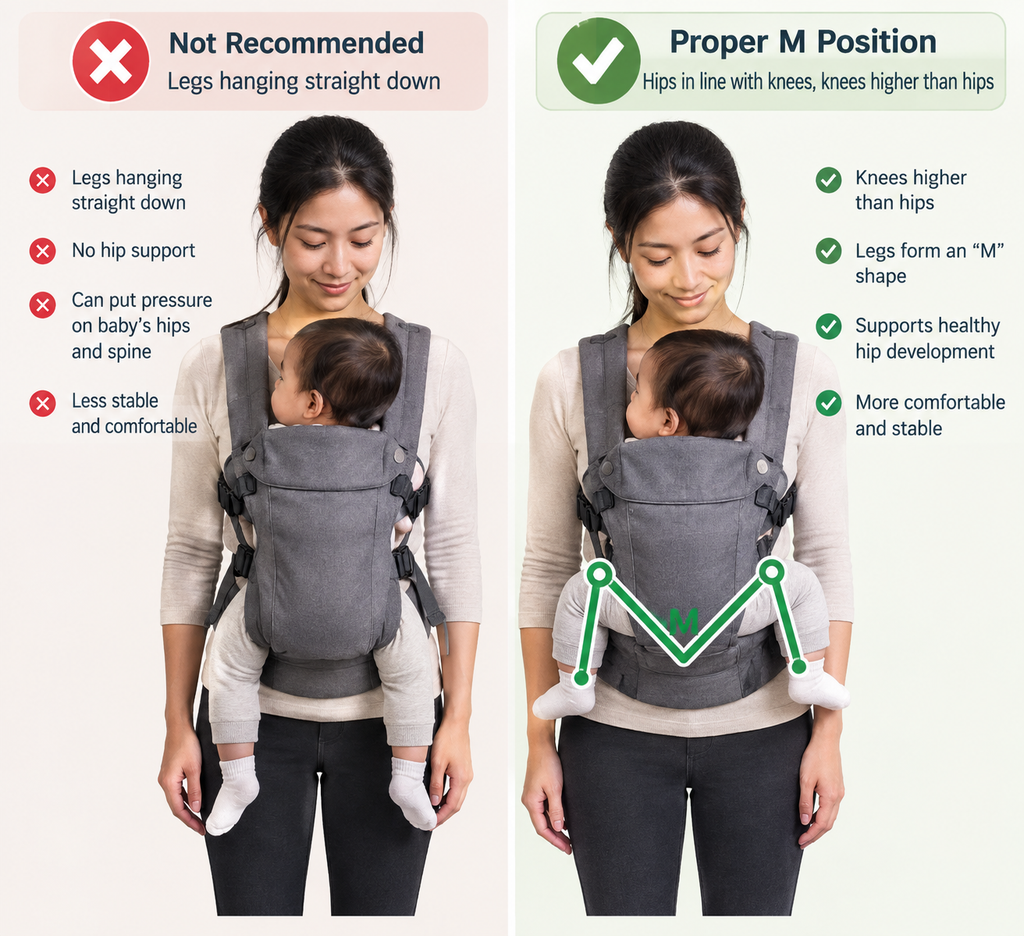
This is the single most important concept in babywearing.
- Knees higher than hips
- Legs forming an “M” shape
- Carrier supporting knee‑to‑knee
This position protects the spine, supports hip development, and keeps baby comfortable and stable.
Babywearing DOs
- Baby high enough to kiss
- Airway open (never chin-to-chest)
- Age‑appropriate carriers
- Even weight distribution for the wearer
- Take breaks for movement and rolling practice
- Prefer baby facing toward you for comfort and safety
Outward Facing: When & How
Outward-facing can be fun, but only when done safely.
- Baby older than 6 months
- Legs supported knee to knee
- Knees higher than hips
- Short durations only
- Never let baby sleep facing out
Babywearing DON’Ts
- Narrow seats (risk of hip dysplasia)
- Too loose (slumping) or too tight (restricted breathing)
- Ignoring weight limits
- Overdressing (overheating risk)
- Forgetting your own comfort
Final Thoughts
Babywearing is a beautiful blend of biomechanics, bonding, and practicality. When done well, it supports your baby’s development while protecting your own body.